
Starting a swimwear brand involves much more than creating attractive designs. Before your first collection reaches customers, you need to turn those designs into production-ready products, develop samples, confirm fit and materials, set a realistic MOQ, finalize branding, control quality, and plan production around your launch date.
For a new brand, one of the most important decisions is choosing the right swimwear factory.
The best factory is not necessarily the one with the lowest price or lowest MOQ.1 It is the factory whose capabilities, development process, production quantity, quality standards, and lead time match your brand's actual needs.
As a swimwear OEM/ODM manufacturer, we work with brand founders, designers, distributors, and retailers at different stages of product development. Some customers come to us with complete Tech Packs, while others start with sketches, reference images, or a general product concept.
The process can be different for every brand, but the basic path is usually:
Product brief → Factory inquiry → OEM/ODM decision → Quotation → Sampling → Approval → Bulk production → Quality control → Shipment
This guide explains what a new swimwear brand should prepare and what to expect when working with a factory.
1. Define Your Swimwear Collection Before Contacting a Factory
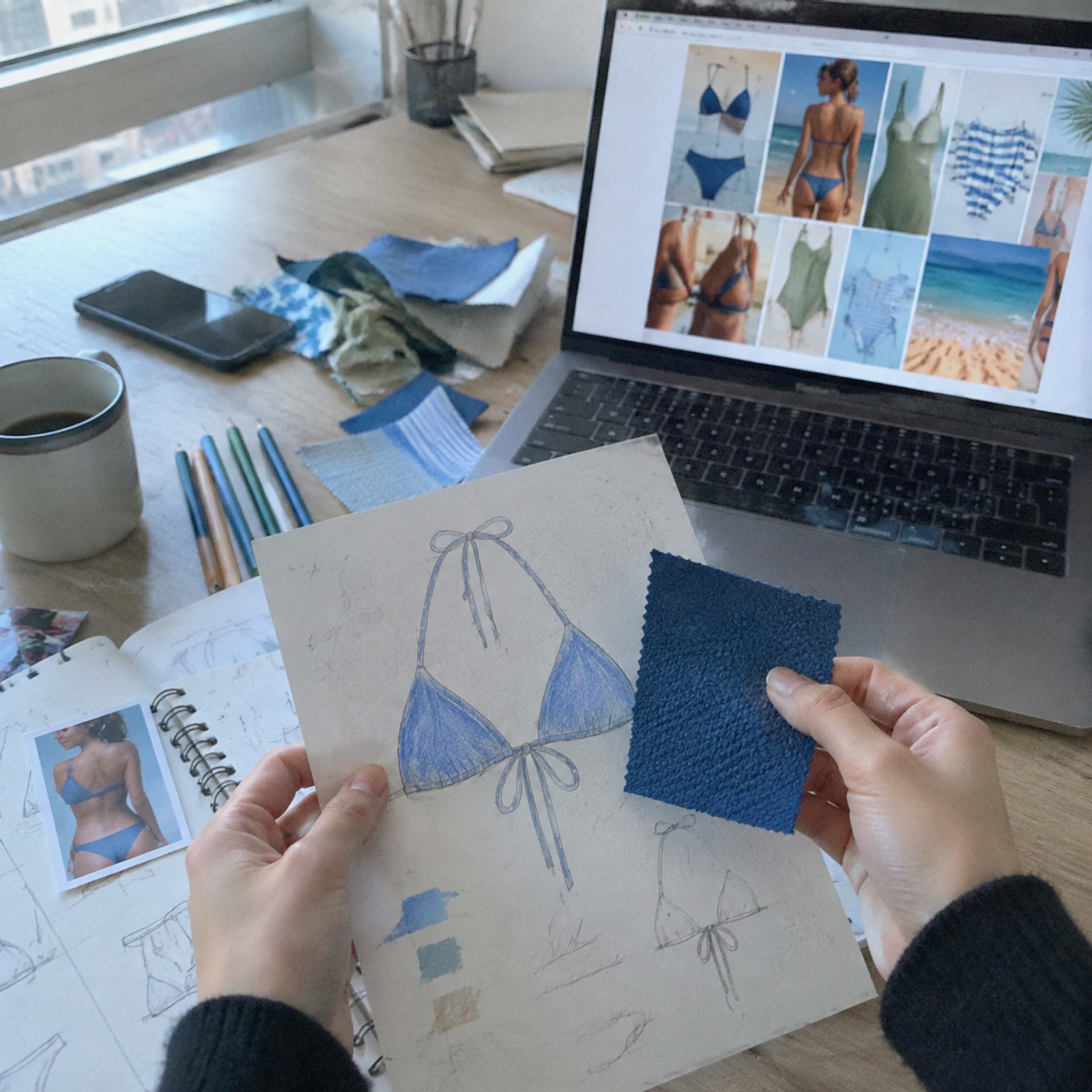
Before contacting a manufacturer, you do not need to know every technical detail. But you should have a clear idea of what you want to make, who you want to sell it to, and approximately how much you expect to order.
At minimum, a factory should understand your target market, product categories, estimated quantities, fabric direction, size range, branding requirements, and target delivery date.
For example, your first collection might focus on:
- Bikini sets
- One-piece swimsuits
- Tankinis
- Plus-size swimwear
- Resort or fashion swimwear
- Performance-oriented swimwear
You should also consider your intended sales market. Sizing, labeling, packaging, fabric requirements, and product positioning can vary between markets.
Start With a Focused Collection
For a first launch, a smaller and more coherent collection is often easier to develop and manufacture.2
Every additional style, color, fabric, print, trim, or hardware component can create another production variable.
A first collection might contain:
- 2–3 bikini silhouettes
- 1–2 one-piece styles
- 3–4 main colors
- A controlled size range
- Consistent branding and hardware
This does not mean a brand has to limit its creativity. It means the first collection should be realistic for the available development budget, MOQ, and expected sales volume.
If you request 20 styles in 15 colors, the factory may need to consider separate material and production requirements for each variation. A collection can quickly become more complicated than its total unit quantity suggests.
2. What Should You Prepare Before Contacting a Swimwear Factory?
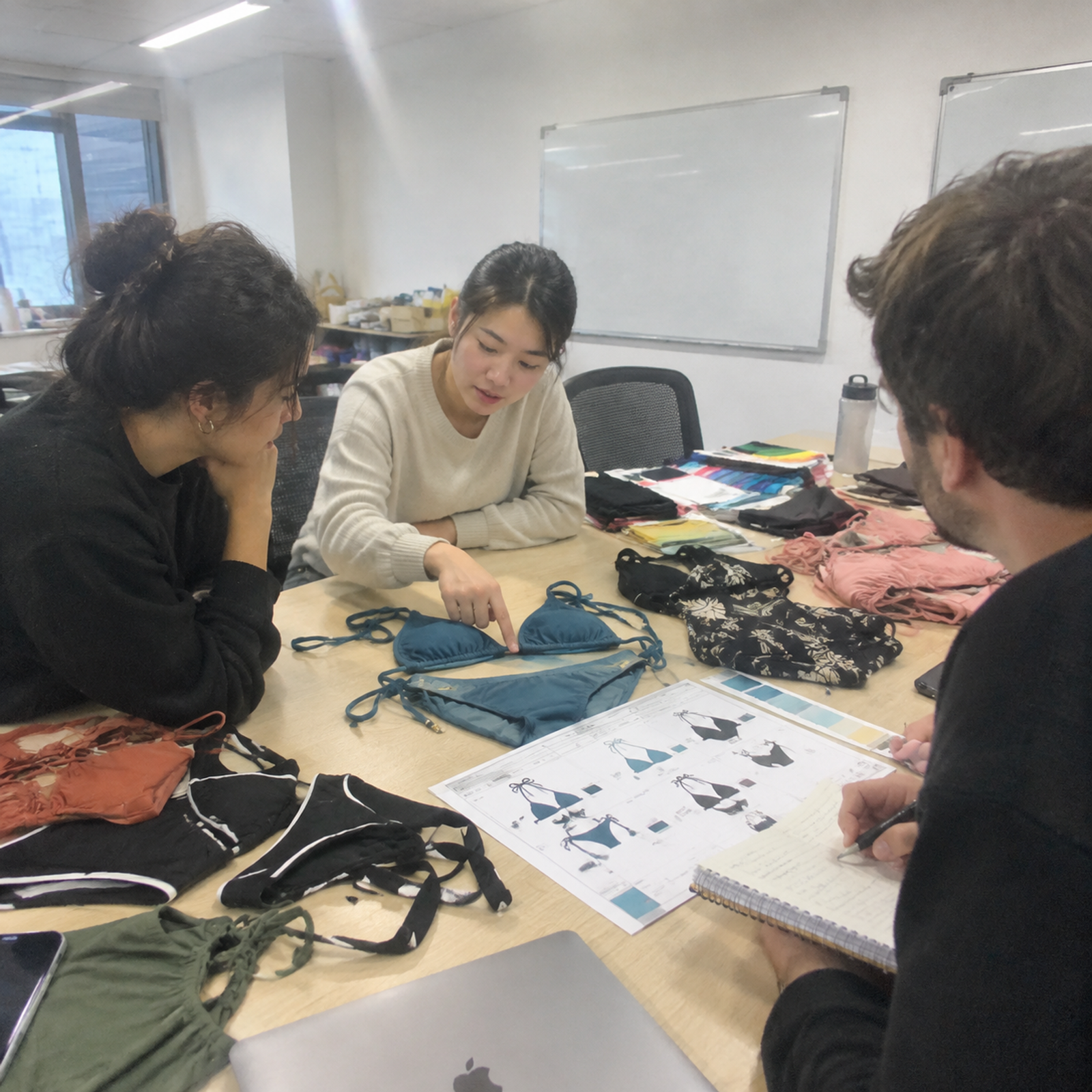
The ideal starting point is a product brief or Tech Pack.
A clear brief allows the factory to understand what you want before giving you a quotation or beginning sample development.
What Should a Swimwear Tech Pack Include?
A useful swimwear Tech Pack should communicate the design, measurements, materials, construction, colors, branding, and other production requirements clearly enough for the factory to develop the product.3
Depending on the style, this may include:
- Technical sketches
- Garment measurements
- Size specifications
- Fabric composition
- Fabric weight or quality requirements
- Lining requirements
- Elastic specifications
- Cup requirements
- Hardware
- Stitching and construction details
- Color references
- Print artwork
- Label placement
- Packaging requirements
- Measurement tolerances
Not every product requires the same level of technical detail. A simple design may have a relatively straightforward specification, while a swimsuit with underwire, molded cups, special construction, or custom printing may require much more information.
What If You Don't Have a Tech Pack?
This is common among new swimwear brands.
You can still contact an OEM/ODM factory without a complete Tech Pack, especially if you are open to an ODM development process.
You can begin with:
- Sketches
- Reference photos
- Existing garments
- Product links
- Fabric preferences
- Color references
- Desired fit
- Target customer
- Target quantity
- Target price
The more information you provide, the easier it is for the factory to understand your requirements.
If you have a strong visual concept but lack technical expertise, an ODM manufacturer may be able to help translate that concept into a production-ready product.
3. Should You Choose OEM or ODM Swimwear Manufacturing?
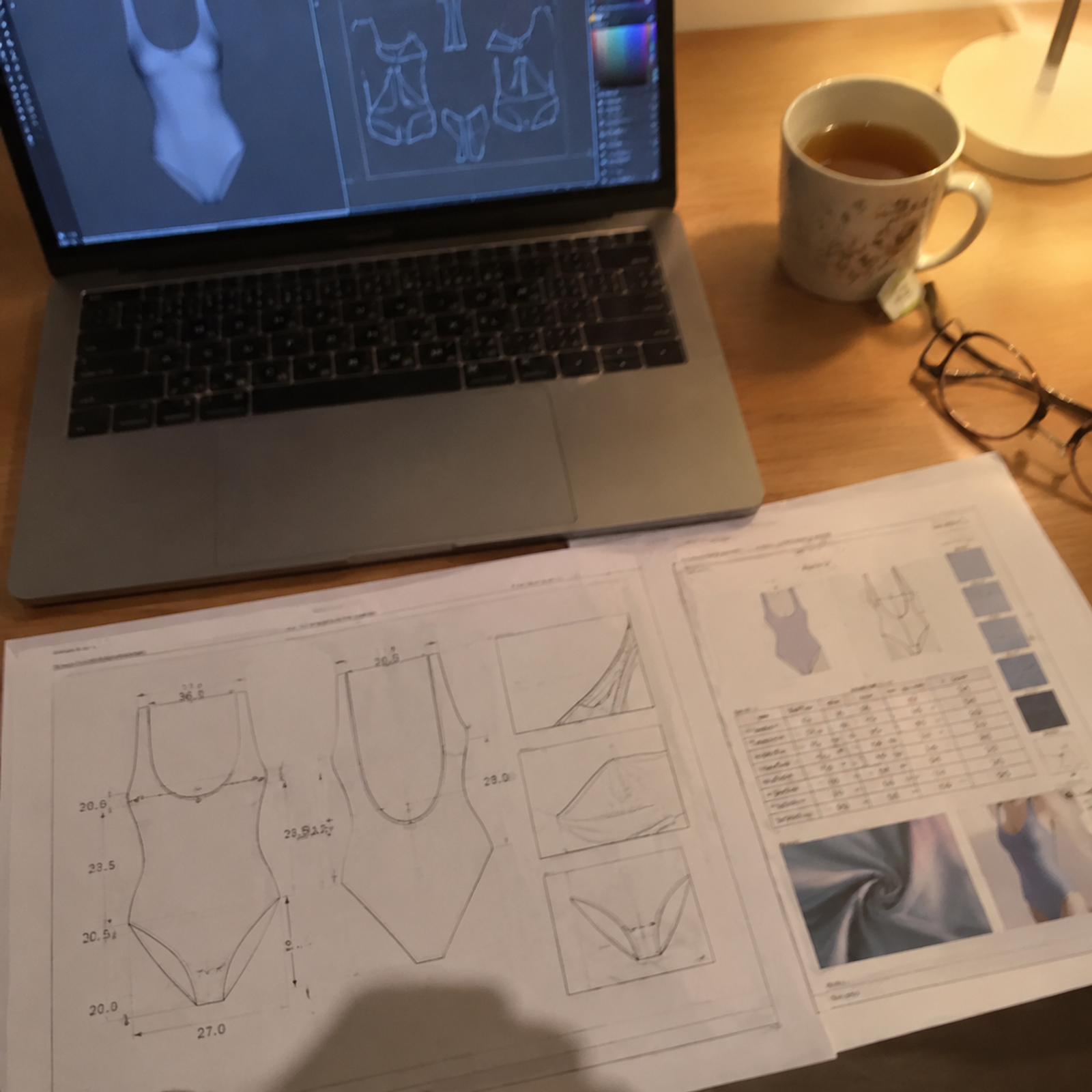
OEM and ODM are two common ways to work with a swimwear manufacturer.4
What Is ODM Swimwear Manufacturing?
With ODM, the factory provides existing designs, patterns, construction options, or collections that can be adapted for your brand.
Depending on the manufacturer, you may be able to customize:
- Fabric
- Color
- Logo
- Labels
- Packaging
- Hardware
- Selected design details
ODM can be suitable when you have a clear brand direction but do not want to develop every pattern and construction detail from zero.
It can also reduce the amount of technical development required during the early stage.
What Is OEM Swimwear Manufacturing?
With OEM, the factory produces swimwear according to your own designs and specifications.
This can include custom:
- Patterns
- Measurements
- Construction
- Fabrics
- Linings
- Hardware
- Branding
- Packaging
OEM is generally more suitable when a brand wants greater control over the product design, fit, materials, and construction.
However, custom development usually requires more communication, sampling, and technical confirmation.
Which Should a New Brand Choose?
If you already have detailed designs and specifications, OEM may be the natural choice. If you have a brand concept but need help turning it into a production-ready collection, ODM may be a practical starting point.
Some brands also combine the two approaches—for example, using selected ODM designs while developing several original OEM styles.
4. Why Do Swimwear Factories Quote Different Prices?
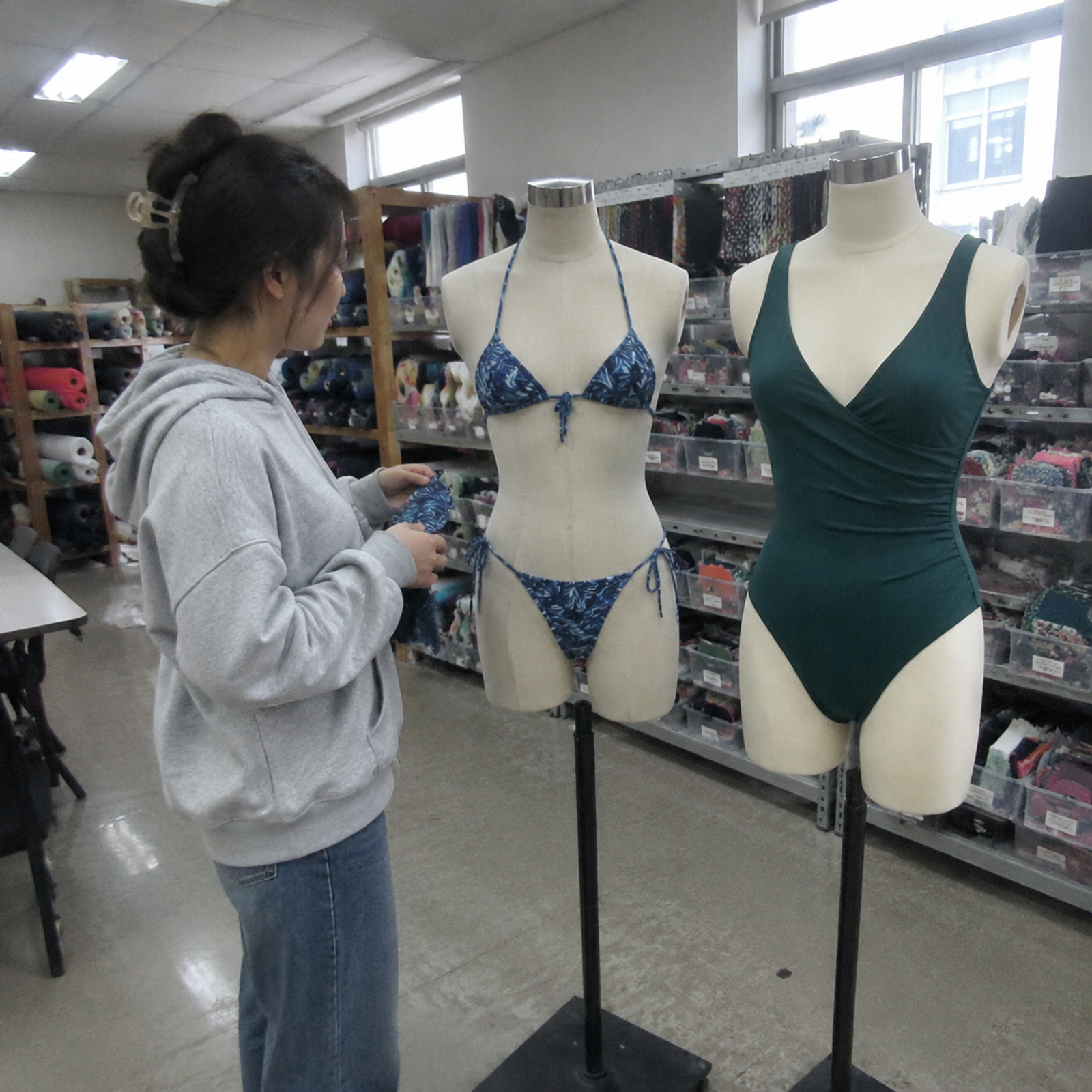
Two swimwear products can look similar in photographs but have very different manufacturing costs.
A swimwear quotation depends on the complete product specification—not just the garment's appearance.5
Factors that can affect the price include:
- Fabric composition
- Fabric weight
- Fabric availability
- Color
- Printing
- Lining
- Cups
- Elastic
- Underwire
- Hardware
- Number of panels
- Sewing construction
- Special finishing
- Logo method
- Packaging
- Order quantity
- Development requirements
For example, a bikini using an existing fabric and standard construction may be relatively straightforward to manufacture.
A custom bikini with a new fabric, custom print, special hardware, molded cups, custom lining, and customized packaging involves many more production variables.
When comparing quotations, make sure the factories are quoting the same specification.
Ask whether the quoted price includes:
- Lining
- Cups
- Hardware
- Labels
- Packaging
- Logo application
- Special finishing
A lower unit price is meaningful only when the products being compared have comparable specifications.
5. How Does Swimwear MOQ Really Work?
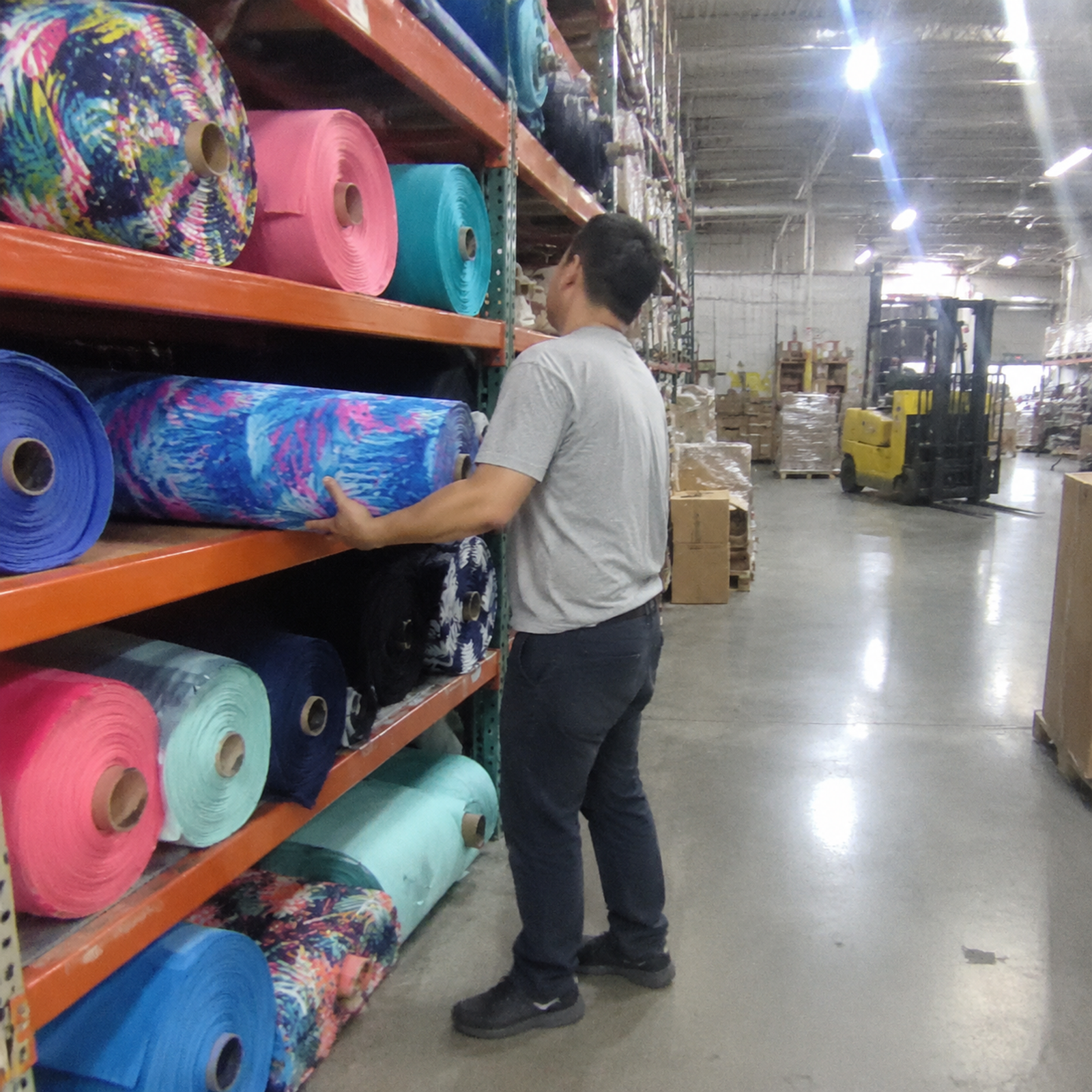
MOQ means Minimum Order Quantity, but a factory's headline MOQ does not always tell you the whole story.
A swimwear MOQ may apply to the total order, style, color, fabric, print, size, or custom component.6
For example, a factory may accept a relatively small total order while the fabric mill requires a higher minimum quantity for a custom color.
Similarly, the garment factory may support a small production quantity while a custom metal logo or printed packaging supplier has its own minimum.
When discussing MOQ, ask:
- Is the MOQ per order?
- Is it per style?
- Is it per color?
- Is it per fabric?
- Is it per print?
- Are sizes included in the same MOQ?
- Are custom components subject to separate minimums?
Is Low-MOQ Swimwear Manufacturing Possible?
Low-MOQ production can be possible, but lower garment MOQ does not mean every material and customization can also be produced in very small quantities.
For a startup brand, one practical approach is to simplify the first order by using:
- Available fabrics
- Existing colors
- Standard hardware
- Lower-threshold branding options
- Fewer styles
Once sales volume grows, more customized fabrics, hardware, packaging, and other components may become commercially practical.
6. What Happens During the Swimwear Sampling Process?
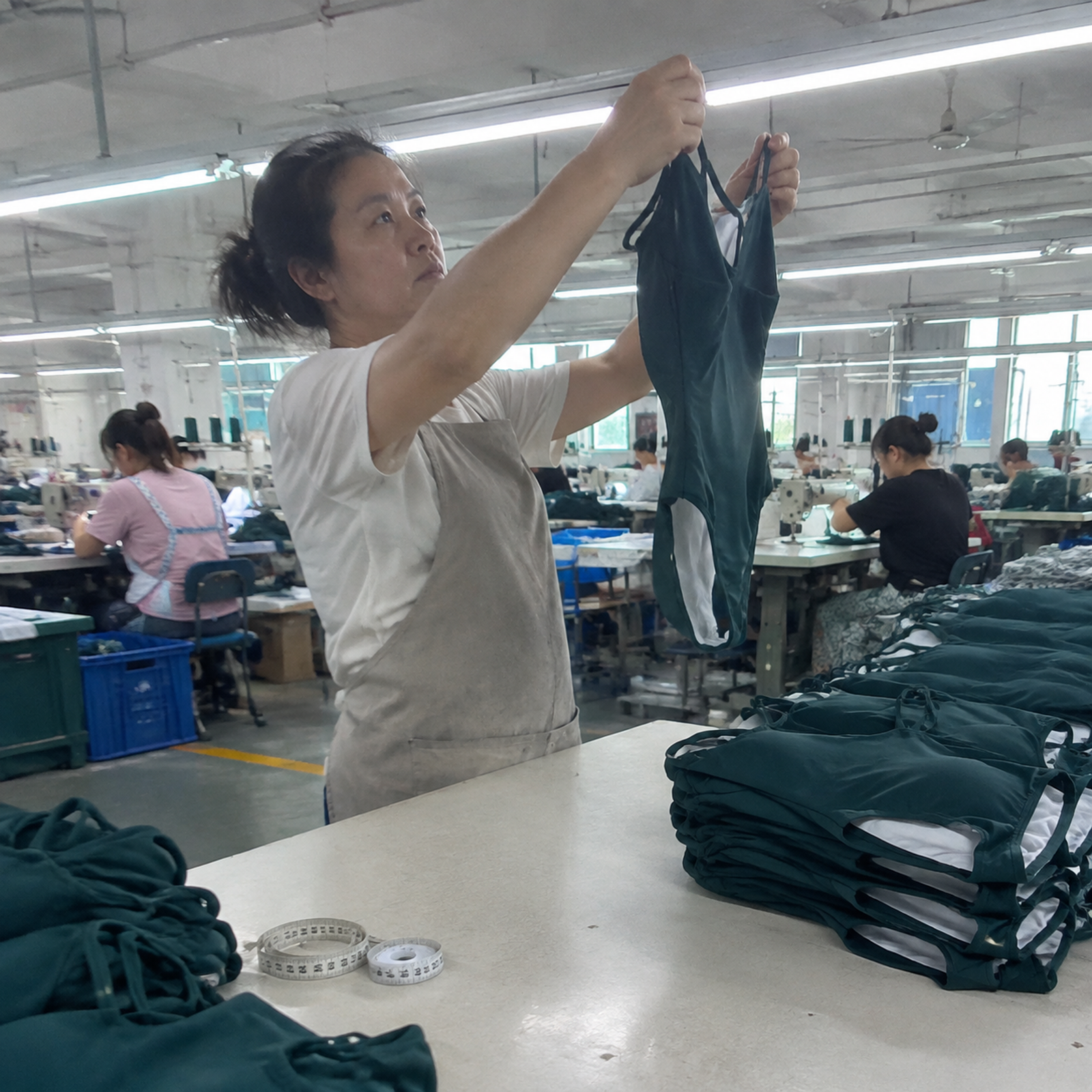
Sampling is one of the most important stages of swimwear manufacturing.
The purpose of sampling is to confirm that the design, pattern, fabric, construction, measurements, and fit work together before bulk production.7
A typical development process may include several stages.
1. Development Sample
The first sample checks the basic design and construction.
The factory and brand may review:
- Silhouette
- Proportions
- Fabric
- Construction
- Major design details
2. Fit Sample
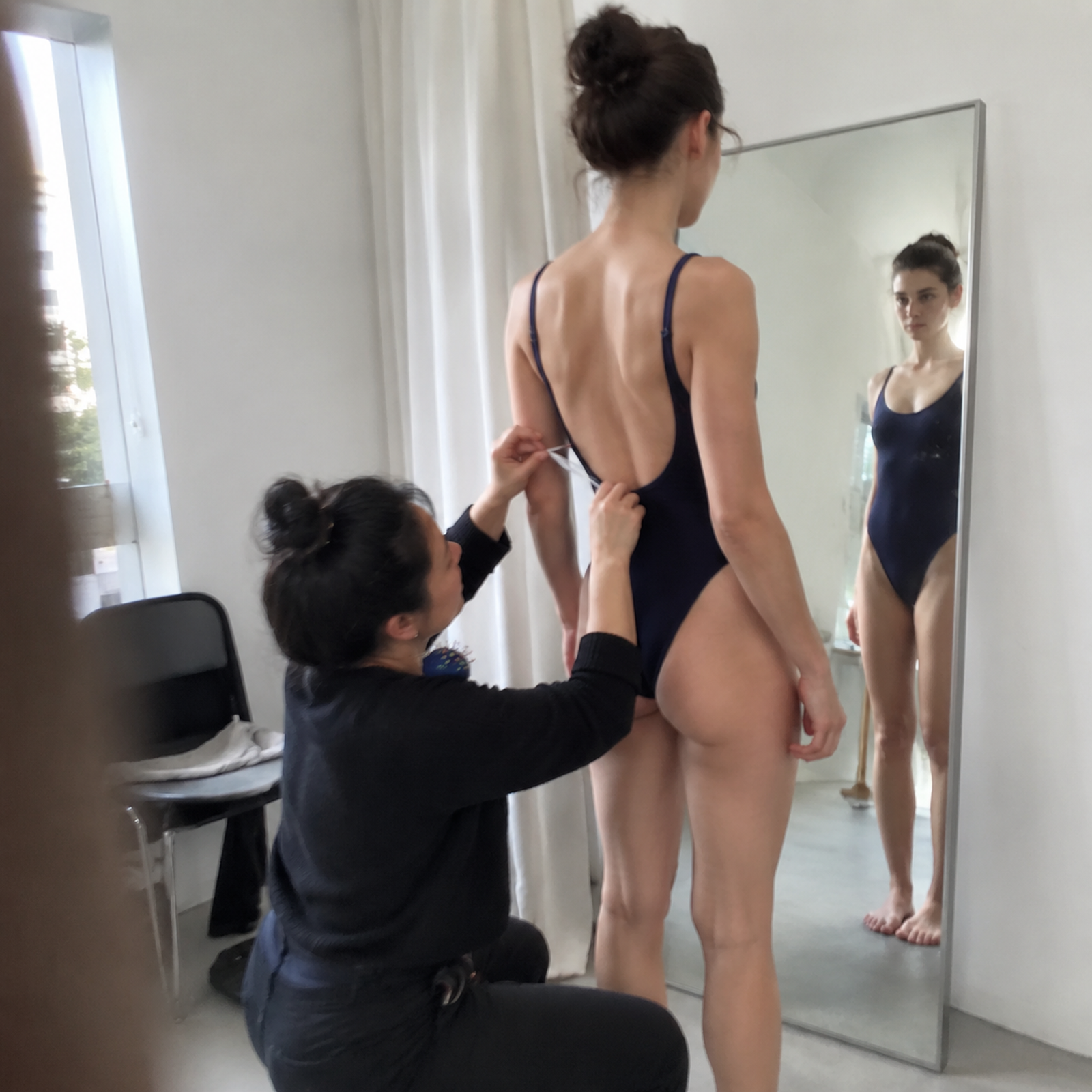
The fit sample focuses on how the garment performs on an appropriate fit model.
Depending on the style, this may include:
- Bust coverage
- Bottom coverage
- Rise
- Strap position
- Elastic tension
- Cup position
- Support
- Comfort
- Overall measurements
3. Size Set
If the collection uses multiple sizes, the approved base pattern needs to be graded.8
Selected sizes may be reviewed to make sure the proportions remain appropriate across the size range.
4. Color or Print Approval
Custom colors and prints may require additional approval through lab dips, strike-offs, or other color references.
5. Pre-Production Sample
The final sample should represent the approved production specification.
This includes:
- Fabric
- Color
- Construction
- Measurements
- Branding
- Trims
- Packaging
Not every swimwear order requires exactly the same number of sample stages.
A simple ODM style may require fewer rounds, while a highly customized swimsuit may require several rounds before bulk production.
7. How Should You Give Feedback on a Swimwear Sample?
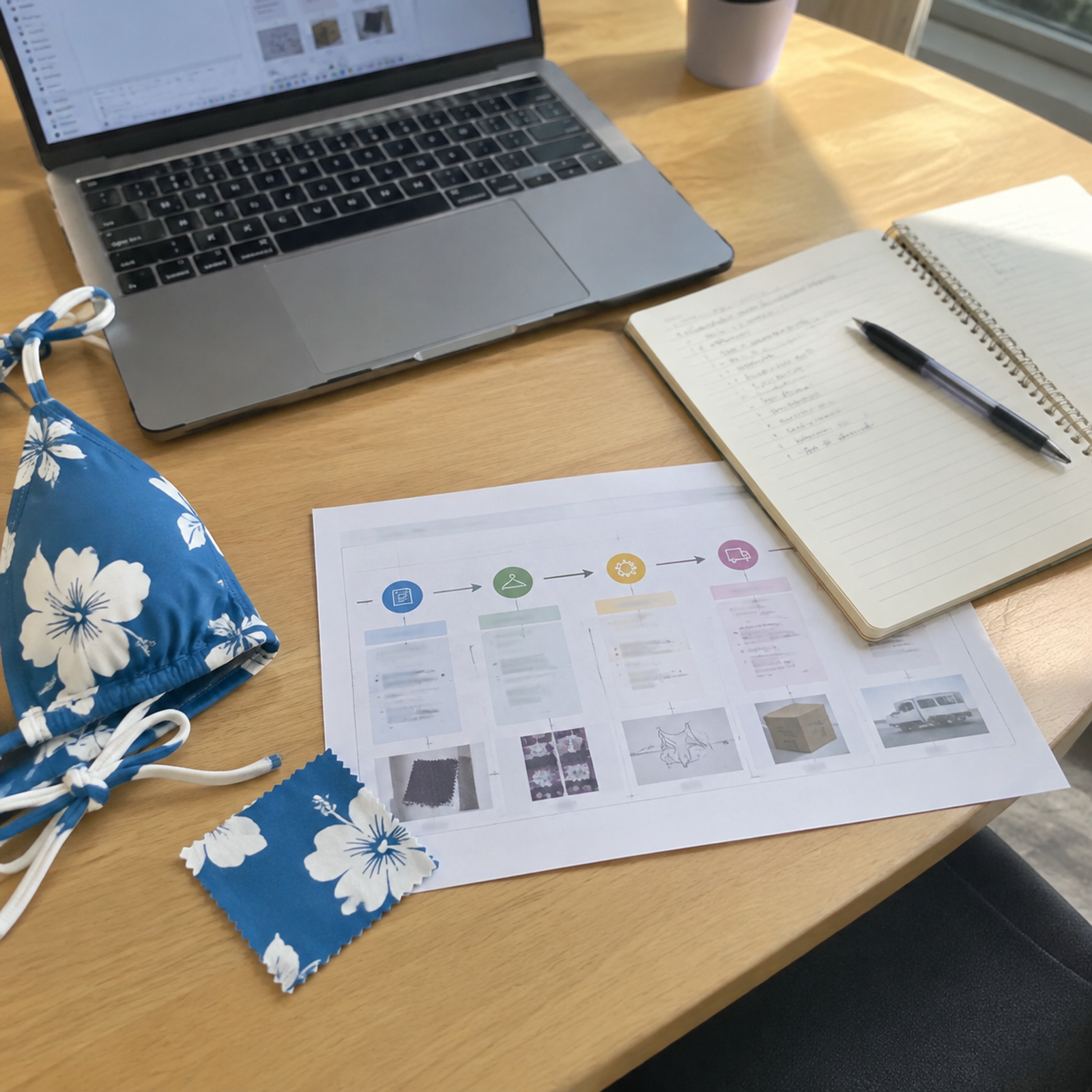
Clear sample comments can save time and reduce repeated revisions.
For example, instead of saying:
“The bottom feels too tight.”
Give the factory a measurable instruction:
“The front rise measures 23.5 cm, while the approved specification is 25 cm. Please increase the front rise by 1.5 cm while keeping the approved back coverage unchanged.”
The more specific the sample feedback, the easier it is for the pattern and production team to make the correct change.9
A useful sample record can include:
- Sample version
- Sample date
- Fabric and lining
- Color or print
- Measurements
- Construction comments
- Photos
- Required corrections
- Factory response
- Approval status
For swimwear, it is also important to look beyond appearance.
Fit and performance can depend on the interaction between:10
- Pattern
- Fabric stretch
- Recovery
- Lining
- Elastic
- Stitching
- Cups
- Hardware
For complex sizing or technical requirements, brands may also work with professional fit technicians or appropriate testing laboratories.
8. What Should You Confirm Before Bulk Production?
Before paying the bulk-production deposit, make sure the important commercial and production terms are clear.
At minimum, confirm MOQ, sample terms, branding requirements, production lead time, and bulk quality standards in writing.
MOQ
Confirm exactly how the minimum quantity is calculated.
Sample Terms
Clarify:
- Sample fee
- Sample lead time
- Included revisions
- Material charges
- Shipping
- Refund policy
- Additional charges for major design changes
A factory correction should not be treated the same way as a completely new design request.
Branding
Confirm the requirements for:
- Woven labels
- Heat transfers
- Metal logos
- Hangtags
- Hygiene stickers
- Polybags
- Cartons
Each may have different setup costs or minimum quantities.
Quality Standards
Link bulk production to the approved:
- Sample
- Measurement specification
- Fabric
- Color
- Construction
- Branding
- Packaging requirements
If possible, also agree on the inspection process and how confirmed production defects will be handled.
9. How Long Does Swimwear Production Take?
A factory's sewing lead time is only one part of the total timeline.
A swimwear launch schedule should include product development, sample revisions, material sourcing, bulk production, inspection, packing, shipping, and potential delays.11
A simplified timeline may look like:
Product brief → Quotation → Sampling → Revisions → Approval → Material preparation → Bulk production → QC → Packing → Shipment
When planning a seasonal collection, work backward from the date the products need to arrive.
For example, if you are preparing for a Southern Hemisphere summer season, consider:
- Sample development
- Sample revisions
- Fabric booking
- Bulk production
- Inspection
- Rework if necessary
- Export documentation
- Freight
- Customs clearance
- Local delivery
Do not plan your launch using the factory's sewing lead time alone.
The earlier you begin development, the more room you have to deal with unexpected sample or material issues.
10. How Can You Tell Whether a Swimwear Factory Is Right for Your Brand?
A factory's website and product catalog can tell you what it wants to show you. The inquiry and sampling process can tell you much more about how the actual working relationship may operate.
Before placing a large order, pay attention to how the factory communicates, quotes, samples, documents changes, explains limitations, and handles problems.
Useful questions include:
Does the factory understand your product?
A manufacturer should ask relevant questions about:
- Fabric
- Construction
- Quantity
- Size range
- Branding
- Packaging
- Delivery
Does the quotation explain what is included?
Make sure you understand what is and is not included in the price.
Does the factory tell you about problems early?
For example, if a requested fabric is unavailable or a component requires a longer lead time, early communication gives the brand more options.
Does the factory document changes?
Important changes should be reflected in updated specifications, sample comments, purchase orders, or other written records.
Can the factory support your product type?
Look for evidence through relevant samples, previous production experience, available capabilities, and the factory's actual response to your requirements.
The right factory is not simply the factory that says “yes” to everything. It is a factory that can clearly explain what is possible, what needs adjustment, and how the product can move into production.
11. Should a New Swimwear Brand Use More Than One Factory?
For a small startup, working with several factories from the beginning is not always necessary.
A new brand may be better served by one qualified primary factory and a backup option that has already been evaluated.12
Using multiple factories can increase:
- Communication
- Sampling
- MOQ requirements
- Fabric coordination
- Color matching
- Fit consistency
- Quality control
As a brand grows, a multi-supplier structure may become useful for capacity, product specialization, or supply continuity.
However, the decision should be based on actual business requirements rather than assuming that more suppliers automatically create a better supply chain.
Frequently Asked Questions
Can I start a swimwear brand without a Tech Pack?
Yes. You can start with sketches, reference images, existing garments, fabric preferences, colors, quantities, and other product information. A factory can then help determine which technical details need to be developed before sampling.
Should I choose OEM or ODM for my first collection?
Choose OEM when you need your own detailed designs and specifications; consider ODM when you want to adapt existing factory designs or need more development support. Some brands use both approaches.
What is a reasonable MOQ for a startup swimwear brand?
A reasonable MOQ is one that fits your expected sales, available budget, and inventory plan—not simply the lowest number a factory advertises. Always ask whether MOQ applies separately to styles, colors, fabrics, prints, and custom components.
How many swimwear samples do I need?
It depends on the product complexity. A simple ODM style may require fewer rounds, while custom patterns, special construction, new fabrics, custom prints, or complex grading may require several development stages.
How can I check swimwear quality before shipment?
Start with an approved specification and pre-production sample, then use appropriate in-process or final inspection for the bulk order. Depending on order value and risk, an independent inspection company can also be used.
How early should I contact a swimwear manufacturer?
Start earlier than your final launch date suggests. Your schedule needs to cover sampling, revisions, material sourcing, production, inspection, logistics, and contingency time—not just sewing.
Conclusion
Starting a swimwear brand with a factory partner becomes much easier when the development process is clear from the beginning.
The basic path is straightforward:
Define your collection → prepare your product information → choose OEM or ODM → request quotations → confirm MOQ → develop samples → approve the product → confirm quality and lead time → begin bulk production.
You do not need to have every technical answer before contacting a factory.
But you should have a clear understanding of your brand, target market, product direction, expected quantity, and level of customization.
A good swimwear manufacturing partner should also do more than provide a unit price.
The factory should be able to help you understand what is realistic in terms of fabric, construction, sampling, MOQ, branding, quality, production timing, and bulk manufacturing.
Aura Intimates Global provides OEM and ODM swimwear manufacturing for emerging fashion brands, private-label distributors, and retailers.
Whether you already have a complete Tech Pack or are starting with product concepts and reference images, our team can discuss your collection, sampling requirements, target quantities, materials, branding, and production schedule.
Contact Aura Intimates Global to discuss your swimwear collection and manufacturing requirements before moving to bulk production.
"Suppliers capability and price analysis chart", https://www.sciencedirect.com/science/article/abs/pii/S0925527304003469. Supply-chain research generally treats supplier selection as a multi-criteria decision involving quality, delivery, technical capability, flexibility, and cost, rather than price alone. Evidence role: expert_consensus; source type: research. Supports: Supplier-selection research commonly evaluates quality, delivery performance, technical capability, flexibility, and cost together rather than treating the lowest quoted price as decisive.. Scope note: General supplier-selection findings are not specific to swimwear manufacturing. ↩
"Impact of Product Variety on Supply Chain in Fast Fashion ...", https://www.sciencedirect.com/science/article/pii/S2212827114003345. Operations-management studies associate increased product variety with greater production-planning, sourcing, setup, and coordination complexity, supporting the practical value of limiting variants during an initial launch. Evidence role: mechanism; source type: paper. Supports: Operations research links greater product variety with additional planning, setup, sourcing, and coordination complexity.. Scope note: The relationship is established broadly in manufacturing and may vary with a factory's systems and available materials. ↩
"Creative Project Challenges Students to Design Clothing Line ...", https://textiles.ncsu.edu/news/2022/08/creative-project-challenges-students-to-design-clothing-line-builds-industry-skills/. Apparel technical-development guidance describes the technical package as the principal record of a garment's drawings, measurements, materials, construction details, color information, and production specifications. Evidence role: definition; source type: education. Supports: Apparel technical-development sources define a technical package as a collection of drawings, specifications, measurements, materials, construction details, and related production instructions.. ↩
"What is OEM vs ODM Contract Manufacturing?", https://www.komaspec.com/about-us/blog/what-is-oem-vs-odm-manufacturing/. Manufacturing literature generally distinguishes OEM arrangements, in which production follows the buyer's design or specification, from ODM arrangements, in which the manufacturer also supplies or develops the underlying product design. Evidence role: definition; source type: research. Supports: Manufacturing literature distinguishes OEM production based on a customer's specifications from ODM arrangements in which the manufacturer contributes an existing or manufacturer-developed design.. Scope note: Commercial use of the terms is not fully standardized, and individual factories may define the scope of OEM and ODM services differently. ↩
"Understanding Clothing Manufacturing Cost: Key Factors ...", https://thygesenapparel.com/blog/clothing-manufacturing-cost. Standard apparel-costing methods derive unit cost from the specified fabric consumption, trims, construction operations, labor, overhead, packaging, and production volume, so visually similar garments may have materially different costs. Evidence role: mechanism; source type: education. Supports: Apparel-costing references calculate garment cost from fabric consumption, trims, labor or manufacturing operations, overhead, packaging, and order-related factors.. Scope note: The relative contribution of each cost component depends on the factory, sourcing market, and order. ↩
"MOQ (Minimum Order Quantity) Explained for Clothing ...", https://mfgmerch.com/what-is-moq/. Apparel-sourcing research describes a multi-tier supply chain in which textile mills, printers, trim suppliers, packaging suppliers, and garment assemblers may impose separate batch or minimum-order constraints. Evidence role: mechanism; source type: research. Supports: Apparel supply chains involve separate suppliers for fabric, printing, trims, packaging, and garment assembly, each of which may impose its own production minimum.. Scope note: The exact unit to which an MOQ applies is a contractual supplier policy, not a universal industry rule. ↩
"Textile quality assurance: A comparison between ...", https://dr.lib.iastate.edu/bitstreams/532d5995-3bc0-4d36-af3e-c8cc63c4cd55/download. Apparel product-development literature identifies sampling as the stage in which design interpretation, pattern and fit, measurements, materials, and construction are evaluated before authorization of bulk production. Evidence role: general_support; source type: education. Supports: Apparel product-development references describe samples as tools for evaluating design interpretation, pattern and fit, measurements, materials, and construction before production approval.. ↩
"A Phenomenological Exploration of the Apparel Sizing ...", https://conservancy.umn.edu/server/api/core/bitstreams/11dfb1b1-341e-490e-977f-f34ff80c43fc/content. In apparel production, pattern grading is the systematic enlargement or reduction of an approved base-size pattern according to specified increments in order to create the remaining size range. Evidence role: definition; source type: education. Supports: Pattern grading is the systematic enlargement or reduction of a base-size pattern to produce patterns for additional garment sizes.. ↩
"How to Review Your First Sample from the Factory", https://startupfashion.com/how-to-review-your-first-sample-from-the-factory-writing-comments-and-checking-specs/. Requirements and quality-management literature finds that specific, measurable, and documented instructions reduce interpretive ambiguity and make subsequent changes easier to implement and verify. Evidence role: mechanism; source type: research. Supports: Research on technical requirements and manufacturing quality emphasizes that specific, measurable instructions reduce ambiguity and improve verification of requested changes.. Scope note: This evidence supports the communication mechanism generally rather than proving a swimwear-specific reduction in revision rounds. ↩
"Analysis of clothing pressure based on material of virtually ...", https://pmc.ncbi.nlm.nih.gov/articles/PMC12588493/. Research on close-fitting stretch garments shows that fit, pressure, support, and dimensional stability arise from the interaction of pattern dimensions, fabric extensibility and recovery, and construction elements such as seams and elastics. Evidence role: mechanism; source type: paper. Supports: Textile and clothing research shows that garment fit and pressure depend on both pattern dimensions and the mechanical behavior of stretch fabrics and elasticated construction.. Scope note: Studies of stretch garments may not test every listed swimwear component, such as cups or decorative hardware, directly. ↩
"Study on Lead Time Delaying Factors in Apparel Supply ...", https://www.academia.edu/36712068/Study_on_Lead_Time_Delaying_Factors_in_Apparel_Supply_Chain_Management_A_Case_Study_on_Order_Execution_Strategies_of_a_Garments_Factory_in_Bangladesh_Course_Code_GMT_4202. Supply-chain studies define end-to-end lead time as the cumulative duration of development, sourcing, production, inspection, handling, and transport, with variability at any stage capable of delaying final availability. Evidence role: mechanism; source type: paper. Supports: Supply-chain research treats total lead time as the combined duration of development, procurement, production, inspection, transport, and waiting or disruption time.. Scope note: Actual swimwear timelines depend on sourcing geography, customization, factory capacity, freight mode, and customs procedures. ↩
"Supply Chain Diversification: Supplier Options for Resilience", https://precoro.com/blog/supply-chain-diversification/. Procurement research identifies a tradeoff between the coordination efficiencies of concentrated sourcing and the disruption protection offered by qualified alternative suppliers, providing contextual support for maintaining a primary supplier and a vetted backup. Evidence role: general_support; source type: paper. Supports: Supply-chain research identifies tradeoffs between single sourcing, which can simplify coordination, and multiple or backup sourcing, which can improve continuity when disruptions occur.. Scope note: The optimal sourcing structure depends on order volume, switching costs, product specialization, supplier capacity, and the brand's tolerance for disruption. ↩