

Finding reliable one piece swimsuit manufacturers can feel risky when every supplier promises premium quality, fast delivery, and competitive prices. A poor decision can lock up cash, delay a seasonal launch, and damage customer trust. You can reduce that risk by screening factories systematically, comparing identical samples, and testing the strongest candidate with a controlled trial order.
Reliable one piece swimsuit manufacturers combine relevant category experience, transparent communication, cooperative sampling, commercially reasonable pricing, realistic production schedules, and accountable after-sales support. A practical screening process is “10 factories → 3 samples → 1 trial order.” This approach evaluates execution rather than relying on low quotations, attractive photos, or persuasive sales presentations.
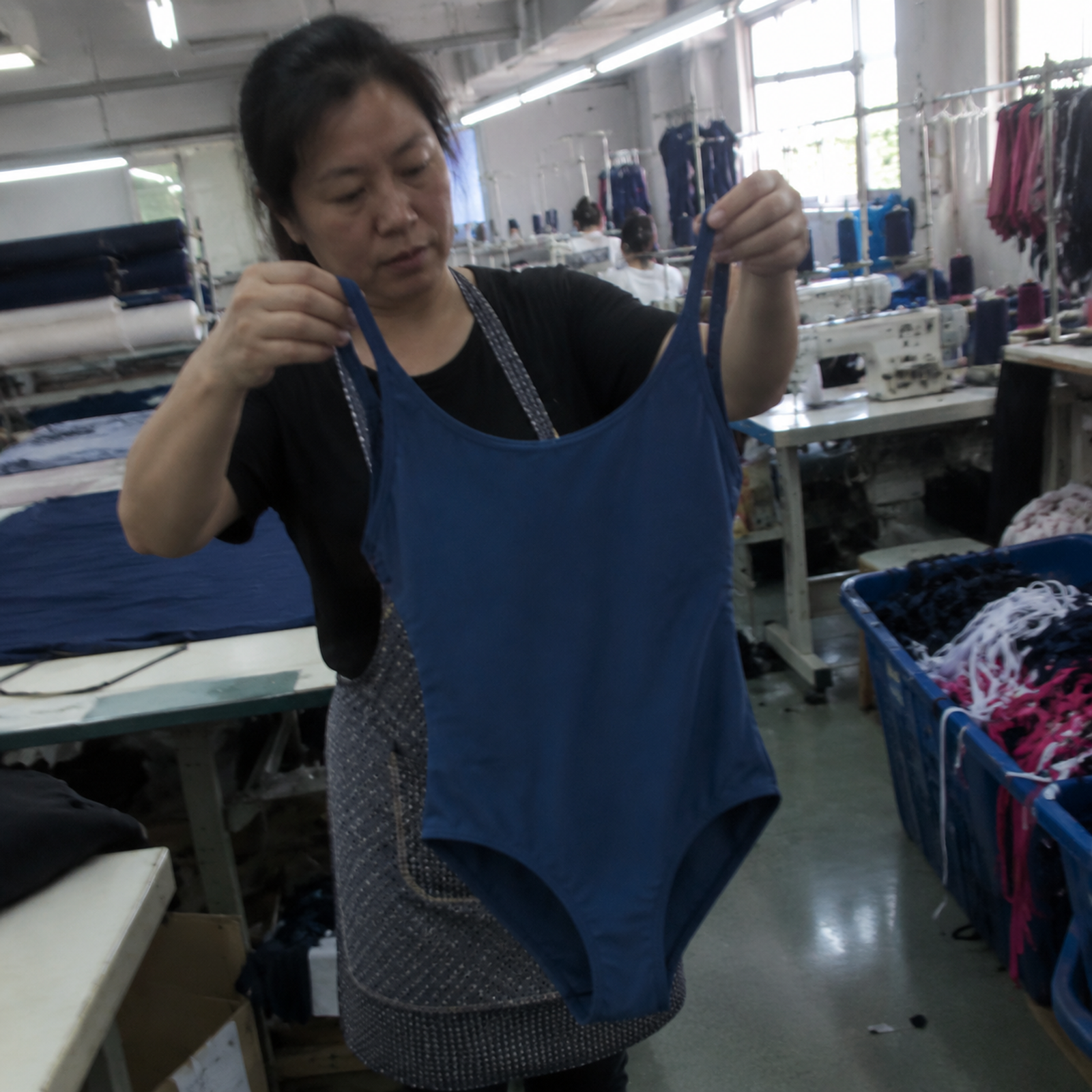
Effective supplier screening focuses on evidence, clear specifications, and problem-solving—not sales promises alone. The following steps explain what buyers should ask, what they should verify, and how they can narrow a long supplier list without treating any single document or sample as final proof.
What Five Questions Should I Ask One Piece Swimsuit Manufacturers?
First-time buyers often send broad questions such as, “Can you make this swimsuit?” That approach creates broad promises instead of useful evidence. Five precise questions are more useful than a broad inquiry because vague answers, unexplained conditions, or pressure to place an order before key details are confirmed can reveal potential supplier risks.
Ask each supplier about its main product category, MOQ structure, sample lead time, bulk production lead time, and available factory evidence. Strong answers should include specific ranges, conditions, and limitations. Workshop videos and recent product photos support initial screening, but buyers should verify capability through samples, inspections, and a trial order.
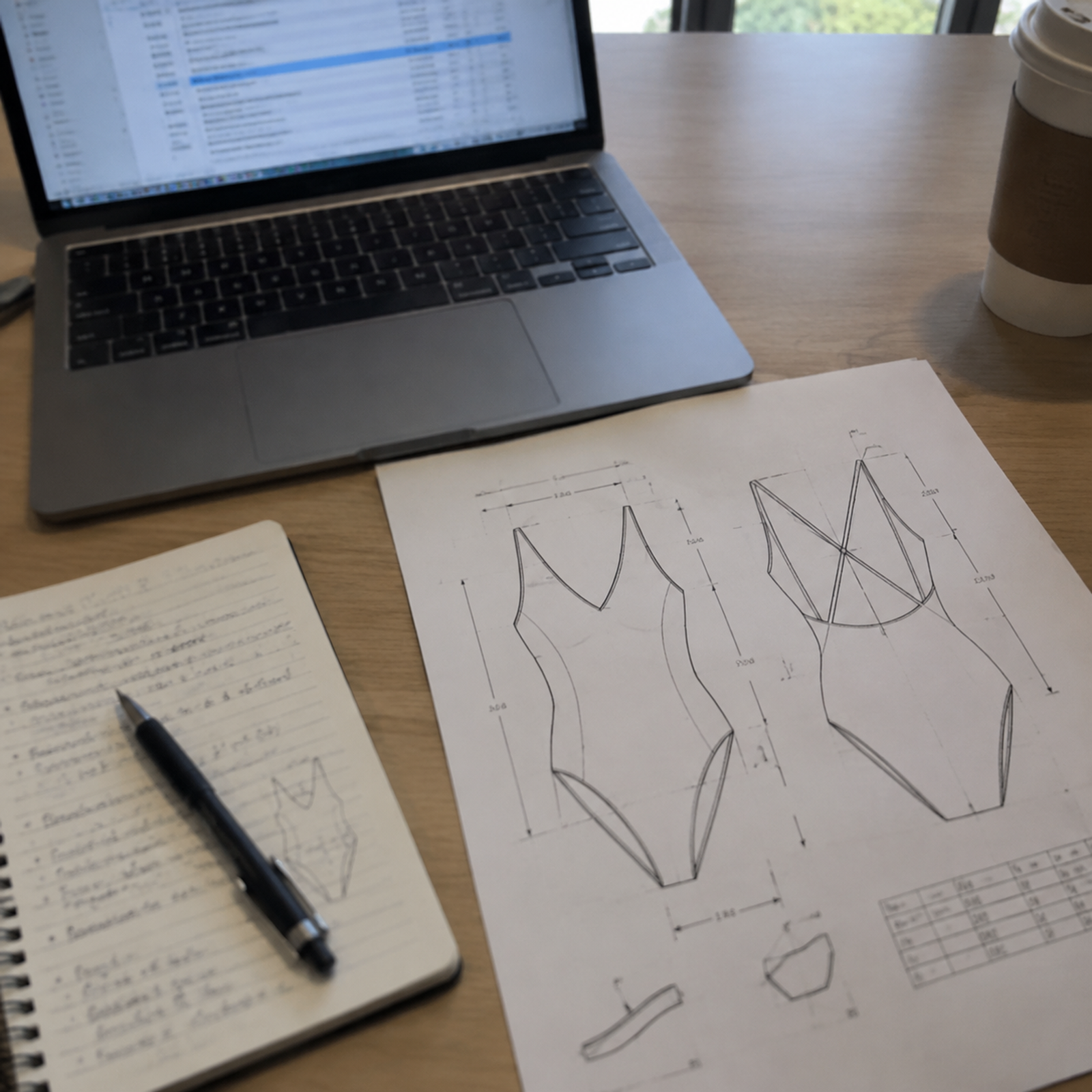
1. What Is Your Main Product Category?
Start by identifying whether the supplier mainly produces swimwear, lingerie, activewear, general fashion, or promotional clothing. A supplier that accepts swimwear orders occasionally may still be capable, but its team should be able to explain the technical requirements involved, including:
- Stretch-fabric handling
- Swimwear lining and opacity
- Elastic application
- Leg-opening recovery
- Cup and support construction
- Strap attachment
- One-piece fit and torso length
- Chlorine, saltwater, and colorfastness concerns
A supplier should not be rejected solely because it makes other products. However, greater weight should be given to one piece swimsuit manufacturers that can discuss comparable styles, construction choices, and common fit risks with specific technical explanations.
2. How Does Your MOQ Work?
Request the minimum order quantity by style, color, size, and total order. A quoted MOQ of 100 pieces can mean 100 pieces in one color, 100 pieces across all colors, or 100 pieces per size-color combination.
Buyers should request a written breakdown. The MOQ should also identify whether custom fabric, custom-dyed colors, printed linings, molded cups, branded hardware, or special packaging create separate minimums.
3. What Is the Sample Lead Time?
Ask the supplier to break the sample timeline into clear stages:
- The supplier reviews the technical pack.
- The supplier sources available fabric and trims.
- The pattern team prepares the first pattern.
- The sample room makes the prototype.
- The supplier conducts its internal review.
- The supplier dispatches the sample.
A supplier should explain when the clock starts. For example, sample production may begin only after the buyer approves available materials and pays the sampling fee.
4. What Is the Bulk Lead Time?
Confirm whether the quoted schedule begins after the deposit, final sample approval, material confirmation, or all three. Also identify which materials or components could delay production.
A firm answer does not need to promise an unrealistically short timeline. A reliable answer should instead define milestones, assumptions, and potential bottlenecks.
5. Can You Provide Current Workshop Evidence?
Request a current workshop video and recent close-up photos of comparable one-piece swimsuits. Where available, look for evidence of cutting, sewing, elastic application, inspection, and packing activities.
These materials should be treated as preliminary screening evidence rather than conclusive proof. Videos can become outdated, and product photographs do not establish ownership of a production facility. Buyers can strengthen verification through live video calls, business-document checks, third-party audits, or on-site inspections.
A professional supplier response might sound like this: “Our main category is swimwear. This design requires MOQ confirmation because the custom hardware has a separate minimum. We can use stock hardware for the first sample, and we will confirm the bulk schedule after material approval.”
An evasive answer usually resembles: “Everything is possible. Send payment first, and we will discuss the details later.”
These examples illustrate communication patterns rather than judgments based on a single phrase. Language differences can affect wording, so the key consideration is whether the supplier ultimately provides clear and verifiable information.
How Should I Compare Ten One Piece Swimsuit Manufacturers?
An unstructured supplier search creates an unfair comparison because each factory receives different information.1 One supplier may quote premium recycled fabric while another assumes basic nylon-spandex fabric. Contact ten one piece swimsuit manufacturers with the same design, specification pack, order quantity, quality expectations, packaging requirements, and required delivery date.
A practical approach is to shortlist about three suppliers from the initial ten. Buyers should compare relevant swimwear experience, response quality, pricing rationale, transparency, sampling cooperation, and schedule feasibility. The cheapest supplier should not win automatically, and an expensive quotation should not receive automatic preference without a clear commercial reason.
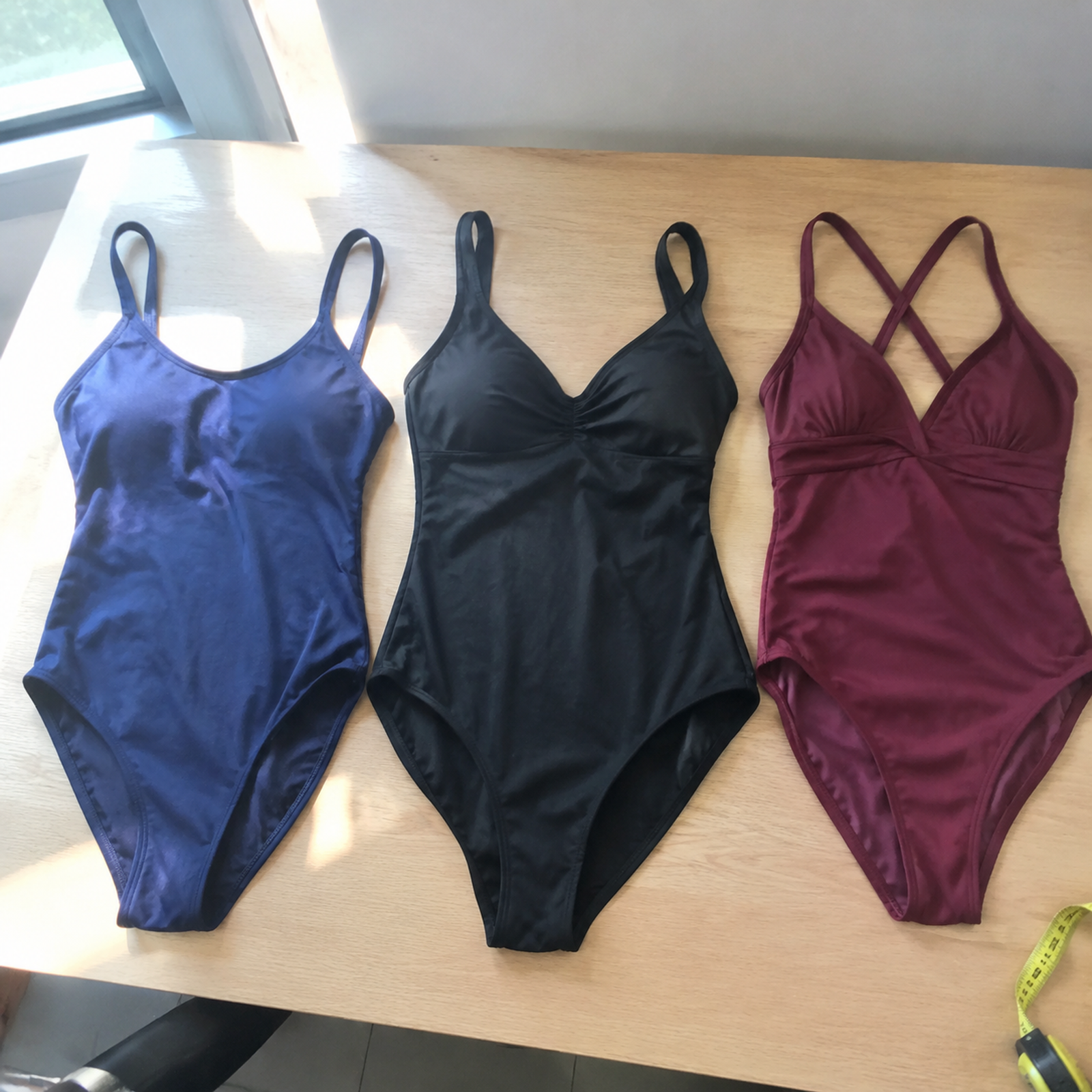
Prepare One Complete Inquiry Package
Give every supplier enough information to quote the same product on a comparable basis. A useful inquiry package normally includes:
- The technical drawing shows the front, back, and important details.
- The specification sheet lists finished garment measurements and tolerances.
- The bill of materials identifies the main fabric, lining, elastic, cups, labels, and hardware.2
- The size range and size ratio show the estimated quantity for each size.
- The color plan states whether colors are stock, custom dyed, or printed.
- The packaging instructions identify polybags, hangtags, cartons, and barcode needs.
- The target order quantity is divided by style and color.
- The delivery requirement distinguishes the factory completion date from the destination arrival date.
If some information remains undecided, state this clearly. Documented assumptions are better than allowing each supplier to make different guesses.
Use a Weighted Supplier Scorecard
A weighted scorecard makes supplier comparisons more consistent than relying on instinct alone. Buyers can adjust the weights to match their business model.
| Evaluation factor | Suggested weight | What to Evaluate |
|---|---|---|
| Relevant one-piece swimwear experience | 20% | Comparable constructions, fabrics, support features, and size ranges |
| Communication quality | 20% | Complete answers, useful questions, and written confirmations |
| Pricing rationale | 15% | Materials, customization, packaging, and exclusions |
| Transparency | 15% | Reasonable evidence and clear limitations |
| Sampling cooperation | 15% | Material options, revision terms, fees, and sample timing |
| Lead-time feasibility | 10% | Milestones against the required launch schedule |
| After-sales process | 5% | Defect documentation and corrective-action procedures |
This scorecard does not prove that a factory will perform well. It creates a more consistent shortlist and makes internal procurement discussions easier.
Compare the Meaning Behind Each Price
An inexpensive supplier is not necessarily unreliable. A lower price may reflect available stock fabric, simpler construction, lower overhead, efficient capacity, or less expensive packaging. However, buyers need to confirm that the quote covers the same specifications.
When quotations differ substantially, investigate the reasons by asking questions such as:
- Does the quotation include lining and removable cups?
- Does the price include custom labels and packaging?
- Does the fabric composition and weight match the requested material?
- Does the supplier include testing, inspection, or shipping costs?
- Does the price assume stock colors rather than custom dyeing?
- Does the price change after size grading or a plus-size ratio is confirmed?
The goal is not to force every quote into the same range. The goal is to understand whether each price is commercially plausible and clearly scoped.
How Should I Evaluate Samples From One Piece Swimsuit Manufacturers?
A polished sample can create false confidence if buyers inspect only its appearance. Compare samples from the shortlisted one piece swimsuit manufacturers against the same technical pack and measurement chart. Evaluate fit, silhouette, measurements, stitching, symmetry, finishing, and specification compliance rather than choosing the sample that photographs best.
Sample evaluation should combine buyer-level visual screening, a documented fitting session, measurement checks, and appropriate material testing. Buyers should not infer shrinkage, pilling resistance, colorfastness, or long-term stretch recovery from appearance alone. Qualified laboratories or textile professionals should evaluate application-specific performance requirements.
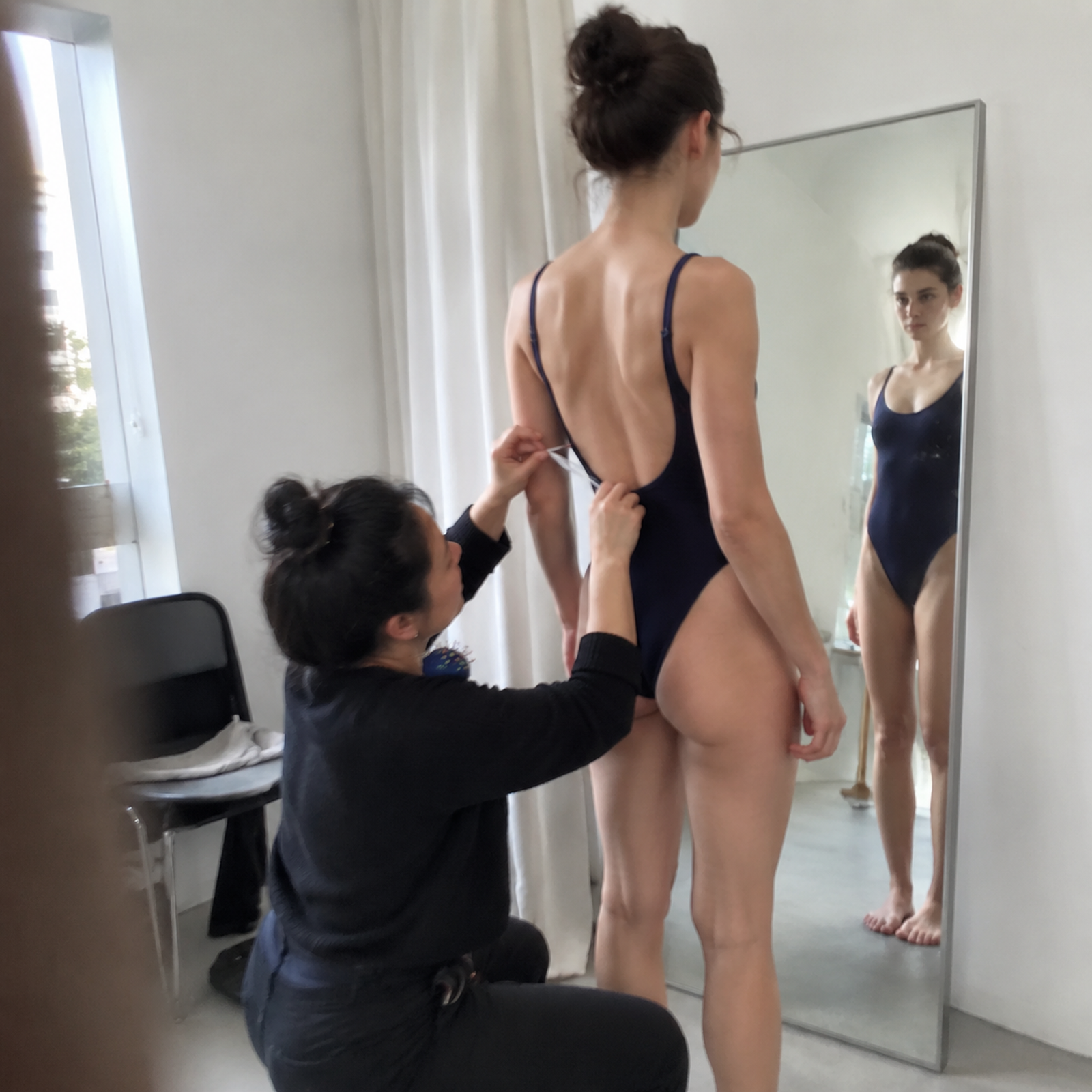
Check Fit and Silhouette First
Evaluate the garment on the intended fit model or according to the brand’s established fitting procedure. A one-piece swimsuit can meet flat measurements and still fit poorly because torso length, stretch direction, cup placement, or leg shape affects the worn silhouette.3
Check the following areas:
- The neckline should sit as intended without unintended gaping.
- The armholes should follow the approved shape.
- The leg openings should provide the planned coverage.
- The crotch should maintain appropriate width and lining coverage.
- The side seams should remain balanced.
- The straps should sit correctly without excessive twisting.
- The bust area should match the planned level of support.
- The back should maintain the approved height and shape.
Photograph every sample from the same angles and record fit comments in writing. Consistent documentation makes it easier to compare similar samples and track revisions.
Measure Against the Specification Sheet
Measure every sample using the same method and tools. The technical pack should explain whether measurements are taken relaxed, stretched, along a curve, or straight across.
A measurement table can prevent unclear feedback:
| Measurement point | Specification | Tolerance | Sample result | Action |
|---|---|---|---|---|
| Bust width | Buyer-defined | Buyer-defined | Record result | Approve or revise |
| Waist width | Buyer-defined | Buyer-defined | Record result | Approve or revise |
| Hip width | Buyer-defined | Buyer-defined | Record result | Approve or revise |
| Torso length | Buyer-defined | Buyer-defined | Record result | Approve or revise |
| Leg opening | Buyer-defined | Buyer-defined | Record result | Approve or revise |
| Strap length | Buyer-defined | Buyer-defined | Record result | Approve or revise |
The buyer should establish specifications and tolerances with a qualified pattern maker or garment technician. Universal tolerances should not be assumed because acceptable limits depend on the fabric, construction, measurement method, size range, and brand standard.
Inspect Workmanship and Symmetry
Conduct a visual inspection under consistent lighting, focusing on:
- Stitching accuracy and skipped stitches
- Loose or unsecured threads
- Seam smoothness
- Elastic tension
- Left-to-right symmetry
- Strap alignment
- Cup position
- Lining coverage
- Hardware security
- Print or stripe matching where applicable
- Label placement
- Overall finishing
Visual inspection does not replace laboratory testing. Its purpose is to identify obvious issues and document precise revision requirements.
Test Fabric Risks Properly
Visual inspection cannot reliably predict shrinkage, pilling, crocking, colorfastness, chlorine resistance, saltwater exposure, or stretch recovery.4 Buyers should define the intended market and end use, then consult a qualified laboratory about suitable ISO, AATCC, ASTM, or other relevant methods.5
If a supplier presents fabric certifications or recycled-material documents, request current copies, check the scope and issuer information, and obtain transaction-specific evidence where relevant. Verify these documents with the issuer or an appropriate specialist. A logo on a presentation does not establish that a specific bulk order is covered.6
What Should Pricing, MOQs, and Lead Times Reveal About One Piece Swimsuit Manufacturers?
Wholesale terms reveal how a supplier plans production and manages risk. However, low MOQs, low prices, and fast timelines do not independently prove reliability. Buyers should evaluate whether one piece swimsuit manufacturers explain the relationship between material minimums, labor complexity, production capacity, order timing, and the buyer’s customization requirements.
Reliable commercial terms should be specific, internally consistent, and tied to the product scope. Buyers should confirm the MOQ at style, color, and size level; identify all price assumptions; and establish dated milestones. A realistic schedule with stated dependencies is more valuable than a short lead-time promise without supporting details.

Understand What Creates the MOQ
A factory’s sewing line may accept a small order while the fabric mill or hardware supplier requires a larger purchase.7 Distinguish the factory’s garment MOQ from the minimum order quantities imposed by fabric mills and component suppliers.
| MOQ factor | Potential effect | Question to ask |
|---|---|---|
| Stock fabric | It may support a lower initial quantity. | “Which colors and quantities are currently available?” |
| Custom-dyed fabric | It may introduce a mill minimum. | “What is the dye-lot minimum, and who owns excess material?” |
| Custom print | It may require setup costs or minimum meterage. | “Does the price include strike-offs and print setup?” |
| Branded hardware | It may require a separate component minimum. | “Can the first order use a standard alternative?” |
| Custom packaging | It may exceed the garment order quantity. | “Can unused packaging be stored for a repeat order?” |
| Multiple colorways | They may divide production efficiency. | “Does each color have its own minimum?” |
Growing brands should also ask about practical alternatives. A supplier may offer stock fabric, standard hardware, digital printing, shared packaging formats, or a limited first color range. These options can reduce initial cash exposure without forcing the factory to accept an uneconomic order.
Build a Milestone-Based Schedule
A statement such as “production takes 30 days” remains incomplete unless the supplier defines the start and finish points. A more useful schedule separates the following stages:
- Material reservation or development
- Sample development
- Fit revision
- Pre-production sample approval
- Bulk material inspection
- Cutting
- Sewing
- Finishing
- Final inspection
- Packing and shipment readiness
For international buyers, it is also important to distinguish factory lead time from total landed lead time. Export booking, consolidation, customs documentation, ocean or air transit, port handling, and import clearance can affect the final arrival date.8
Aura Intimates Global offers OEM/ODM swimwear solutions backed by more than 10 years of industry experience, serving clients across international markets. Buyers should confirm that the proposed product specifications, documentation, production capacity, and schedule meet their order requirements. Industry experience does not replace order-level due diligence.
Protect the Seasonal Deadline
Swimwear collections often depend on fixed summer, resort, and holiday sales windows. Set decision deadlines and include contingency time before confirming the launch plan.
The purchase agreement should clarify:
- The buyer’s approval deadlines
- The supplier’s production milestones
- The consequences of buyer-requested changes
- The process for reporting delays
- The inspection timing
- The shipping responsibility under the selected Incoterm
- The documents required for customs clearance
A clear timeline helps both parties identify problems while corrective options remain available.
Why Should I Test One Piece Swimsuit Manufacturers With a Trial Order?
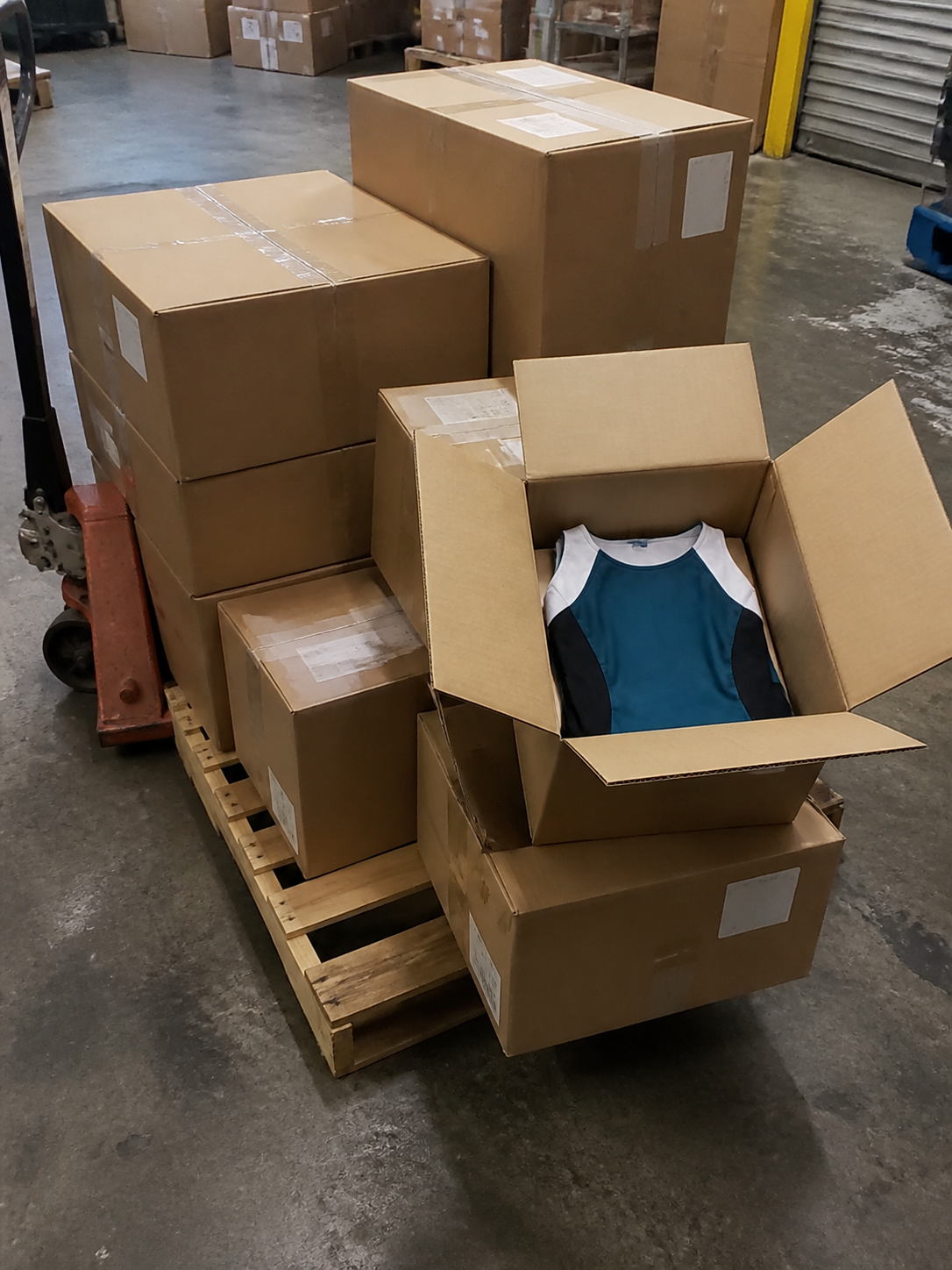
A strong sales presentation and an impressive sample show only part of a supplier’s capability. Bulk production introduces material variation, operator differences, production pressure, and packing requirements.9 A controlled trial order helps determine whether shortlisted one piece swimsuit manufacturers can maintain consistency and communicate responsibly when issues arise.
A trial order should test bulk consistency, milestone control, specification compliance, communication under pressure, and corrective-action procedures. Buyers should define inspection criteria before production begins. The goal is not to demand perfection; the goal is to determine whether the supplier identifies, contains, documents, and resolves problems responsibly.
Define the Trial Before Paying a Deposit
Keep the trial order large enough to reveal basic production-control issues but small enough to limit financial exposure before committing the full seasonal budget.
Before paying the deposit, confirm:
- The approved sample and revision record
- The final bill of materials
- The measurement specifications and tolerances
- The color and material references
- The labeling and packaging requirements
- The inspection method
- The production milestones
- The defect-reporting process
- The corrective-action procedure
- The payment and shipping terms
Where practical, retain an approved reference sample so both parties can compare bulk production against the agreed standard. Both parties should know which physical sample and documents govern production.
Inspect Bulk Consistency
A single development sample may receive unusual attention. The trial order shows whether the supplier can repeat the approved result across multiple garments.
Check whether bulk units remain consistent in:
- Color and shade
- Measurements
- Stitching and elastic tension
- Strap placement
- Cup and lining placement
- Symmetry
- Label positioning
- Packaging
- Carton markings
Buyers can appoint a qualified third-party inspector for pre-shipment checks. The buyer and inspector should agree on the sampling plan, defect classifications, and acceptance criteria before the inspection. A recognized sampling framework can support the process, but a qualified quality professional should help select an appropriate plan for the product and risk level.10
Evaluate the Supplier’s Response to Problems
Problem resolution is one of the clearest indicators of supplier reliability. Production issues can occur even in experienced factories; what matters is how the supplier responds.
A responsible response usually includes:11
- The supplier acknowledges the issue.
- The supplier contains affected goods where possible.
- The supplier investigates the likely cause.
- The supplier proposes rework, replacement, sorting, credit, or another appropriate remedy.
- The supplier records preventive action for future orders.
An unreliable response may involve denial without investigation, unexplained silence, shifting responsibility, or shipping known nonconforming goods without approval.
Clarify after-sales responsibilities before placing the order. The agreement should explain the claim window, evidence requirements, remedy options, and responsibility for inspection, rework, replacement, or credit. Legal counsel or an experienced sourcing professional should review terms that involve substantial commercial exposure.
Frequently Asked Questions
How many one piece swimsuit manufacturers should I contact?
Contacting about ten suppliers with an identical inquiry package provides a useful starting point for comparison. This number usually provides enough comparison without making the process unmanageable. Buyers can then shortlist approximately three factories for sampling and select one supplier through a controlled trial order.
Should I choose the one-piece swimsuit factory with the lowest MOQ?
A factory should not be selected on MOQ alone. A low MOQ can help protect cash flow, but buyers should confirm material minimums, unit pricing, customization limits, lead times, and quality controls. The most useful MOQ is one that supports a commercially viable and clearly defined first order.
Does a workshop video prove that a supplier owns a factory?
A workshop video supports initial screening, but it does not prove current ownership, capacity, or order-specific capability.12 Buyers should request a live call, checking business documents, reviewing comparable products, ordering samples, and using a third-party audit or inspection when the order value justifies it.
What should I include in a one-piece swimsuit technical pack?
A useful technical pack should include front and back drawings, construction details, finished measurements, tolerances, fabric and lining requirements, trims, color references, size grading, label placement, packaging, and testing needs. A qualified garment technician should review application-specific fit and construction requirements.
When should I request fabric testing?
Arrange appropriate testing before bulk approval when fabric performance affects product claims, regulatory compliance, customer expectations, or commercial risk. Buyers should consult an accredited laboratory or textile specialist about appropriate methods for colorfastness, shrinkage, pilling, stretch recovery, chlorine exposure, and other relevant properties.
Conclusion
Reliable one piece swimsuit manufacturers should demonstrate category experience, clear communication, sampling cooperation, realistic commercial terms, controlled production, and accountable after-sales support. The 10 factories → 3 samples → 1 trial order method replaces assumptions with comparable evidence and provides a structured way to assess supplier performance.
Buyers should also verify certifications, inspect bulk goods, and seek qualified technical or legal advice for application-specific decisions. If you need OEM or ODM support for a new one-piece collection, contact Aura Intimates Global to discuss your design, MOQ, sampling plan, and target delivery window.
"OECD Guidelines for Fighting Bid Rigging in Public ...", https://www.oecd.org/en/publications/oecd-guidelines-for-fighting-bid-rigging-in-public-procurement-2025-update_cbe05a56-en/full-report/component-4.html. International procurement guidance emphasizes that bidders should receive consistent specifications and information so that offers can be evaluated on a common basis. Evidence role: general_support; source type: institution. Supports: Standardized specifications and equal access to procurement information support transparent, comparable supplier offers.. Scope note: Public-procurement principles provide contextual support and do not establish that every apparel sourcing exercise must use the same number of suppliers or documents. ↩
"The Ultimate Guide to Bill of Materials in Fashion", https://techpacker.com/blog/design/bill-of-materials-how-to-create/. Apparel-production references define a bill of materials as the organized record of fabrics, trims, labels, hardware, and other components required to manufacture a specified garment. Evidence role: definition; source type: education. Supports: A bill of materials is a structured list of the raw materials, trims, and components needed to produce a garment.. ↩
"Quick Guide: How to Measure Torso for Swimsuit (+Tips!)", https://bigblue.atlantisuniversity.edu/how-to-measure-torso-for-swimsuit/. Research on apparel fit treats fit as a three-dimensional interaction among body shape, pattern dimensions, construction, and fabric mechanical properties, explaining why conformity to flat measurements alone may not ensure satisfactory worn fit. Evidence role: mechanism; source type: paper. Supports: Garment fit depends on interactions among body dimensions, pattern geometry, construction, and fabric stretch rather than on isolated flat measurements alone.. Scope note: General apparel-fit research may not test the exact swimsuit features listed in the article. ↩
"Student Research Projects Use AATCC Test Methods", https://www.aatcc.org/news-read/insights/student-research-projects-use-aatcc-test-methods. ISO, ASTM, and AATCC maintain controlled test methods for dimensional change, pilling, colorfastness, crocking, and elastic recovery, indicating that these performance properties cannot be established reliably through unaided visual inspection. Evidence role: mechanism; source type: institution. Supports: Textile properties such as dimensional change, pilling, color transfer, colorfastness, and stretch recovery are evaluated through defined test procedures rather than appearance alone.. Scope note: The appropriate method and acceptance threshold depend on the textile, intended use, market, and contractual specification. ↩
"Online Store", https://members.aatcc.org/store/items/. Textile standards organizations publish distinct methods for particular materials, exposures, and performance properties; consequently, a test plan must match the product's intended use and the claim or risk under evaluation. Evidence role: expert_consensus; source type: institution. Supports: Recognized standards bodies publish application-specific textile methods, and method selection must correspond to the property and use being evaluated.. Scope note: Standards catalogues identify available methods but do not independently determine which tests are legally required for every destination market. ↩
"ISO - Certification", https://www.iso.org/certification.html. Accreditation and certification guidance distinguishes the display of a mark from verification of a valid certificate's holder, scope, status, and applicability to the product or activity at issue. Evidence role: general_support; source type: institution. Supports: Certification status must be checked against the certificate holder, scope, validity, and applicable product or transaction rather than inferred from a displayed mark.. Scope note: Verification requirements vary among certification schemes, particularly where transaction certificates or chain-of-custody records are used. ↩
"Minimum Order Quantity Textiles: A Procurement Guide", https://gjergjihtextil.com/en/minimum-order-quantity-textiles-a-procurement-guide/. Supply-chain research shows that minimum order quantities may be imposed at multiple tiers to account for setup costs, economical batch sizes, and replenishment constraints, so a sewing facility's preferred quantity need not match a mill's or component producer's minimum. Evidence role: mechanism; source type: paper. Supports: Minimum order quantities can arise at different supply-chain stages because suppliers face setup costs, batch sizes, and material-purchasing constraints.. Scope note: The size and source of a specific MOQ remain supplier- and component-dependent and must be confirmed for the individual order. ↩
"Common Export Documents", https://www.trade.gov/common-export-documents. Government and international trade guidance describes export documentation, freight movement, terminal handling, and customs clearance as separate stages of cross-border delivery, each of which can affect the date on which imported goods become available to the buyer. Evidence role: mechanism; source type: government. Supports: International delivery time can include freight booking, documentation, transport, port operations, and customs clearance in addition to manufacturing.. Scope note: Actual timing varies by route, transport mode, port conditions, shipment terms, and customs regime. ↩
"1: Introduction — Processes and Variation Framework", https://ocw.mit.edu/courses/2-830j-control-of-manufacturing-processes-sma-6303-spring-2008/resources/1-introduction-2014-processes-and-variation-framework/. Manufacturing quality research recognizes materials, machines, methods, measurement systems, environmental conditions, and personnel as sources of process variation, supporting the need to assess repeatability beyond a single development sample. Evidence role: mechanism; source type: research. Supports: Production output varies because of material, machine, method, measurement, environmental, and operator-related factors that may be less visible in a single prototype.. Scope note: This general manufacturing framework supports the mechanism but does not quantify variation in one-piece swimsuit production specifically. ↩
"ISO 2859-1:2026 - Sampling procedures for inspection by ...", https://www.iso.org/standard/2859-1. Acceptance-sampling guidance explains that inspection plans specify sample sizes and acceptance criteria while balancing producer and consumer risks; plan selection therefore depends on the lot, defect definitions, quality objectives, and consequences of nonconformity. Evidence role: expert_consensus; source type: government. Supports: Acceptance sampling uses defined sample sizes and acceptance criteria, with plans selected according to lot characteristics and acceptable decision risks.. Scope note: Sampling inspection estimates lot acceptability and does not guarantee that every unit in an accepted shipment conforms. ↩
"ISO 9001 Auditing Practices Group Guidance on:", https://www.iso.org/files/live/sites/tc176sc2/files/documents/ISO%209001%20Auditing%20Practices%20Group%20docs/Auditing%20General/APG-ReviewNonconformity2015.pdf. Quality-management guidance treats nonconformity control as a structured process involving containment or correction, evaluation of causes, implementation of corrective action, and review of whether the action prevents recurrence. Evidence role: mechanism; source type: institution. Supports: Quality-management systems address nonconformities through control or containment, correction, cause evaluation, corrective action, and effectiveness review.. Scope note: The appropriate commercial remedy—such as rework, replacement, or credit—depends on the contract and is not prescribed by general quality-management standards. ↩
"Qualification of suppliers, a helpful reminder of the 3 steps ...", https://mhrainspectorate.blog.gov.uk/2016/03/17/qualification-of-suppliers-a-helpful-reminder-of-the-3-steps-needed-to-assure-supply-chain-integrity/. Official trade guidance recommends corroborating a prospective foreign supplier's identity and capabilities through independent records, references, direct checks, and, where warranted, site visits or third-party investigations rather than relying solely on materials supplied by the seller. Evidence role: general_support; source type: government. Supports: Supplier due diligence commonly combines registration checks, references, document review, direct communication, and site or third-party verification rather than relying on supplier-provided media alone.. Scope note: Such checks reduce uncertainty but cannot guarantee future capacity, performance, or compliance on a particular purchase order. ↩